Research & instrument making
Job tracking and quoting software for research machine shops
Built for the instrument shop of a world-renowned Ivy League university, which makes one-off parts for research groups across the institution.
An in-house machine shop has an unusual customer: a principal investigator with a grant, a deadline and no interest in the shop’s queue. The portal exists so both sides can see the same job.
- Sector
- Research & instrument making
- Stack
- Vue · Laravel
- Role
- Full stack developer
The problem
What in-house shops are up against
Jobs arrive however they arrive
Email, a walk-in with a drawing, a conversation in a corridor. There is no queue, so there is no way to say what the shop is committed to.
Investigators cannot see where their part is
The only way to find out is to ask, which means the shop is answering the same question all day instead of making parts.
Quoting is done from scratch every time
Labour hours, materials, tooling and outside processes are worked out by hand on each job, and the reasoning is not kept anywhere.
Recharges are reconciled at month end
Charge strings and departments are captured informally, so the recharge is an exercise in remembering rather than a report.
Drawings and revisions get separated from the job
The part is made from whichever PDF was closest to hand, which is a problem exactly once.
Approvals are chased over email
A quote goes out, nothing comes back, and the job sits — with nobody sure whether it is waiting on the shop or on the lab.
The answer
How the portal handles it
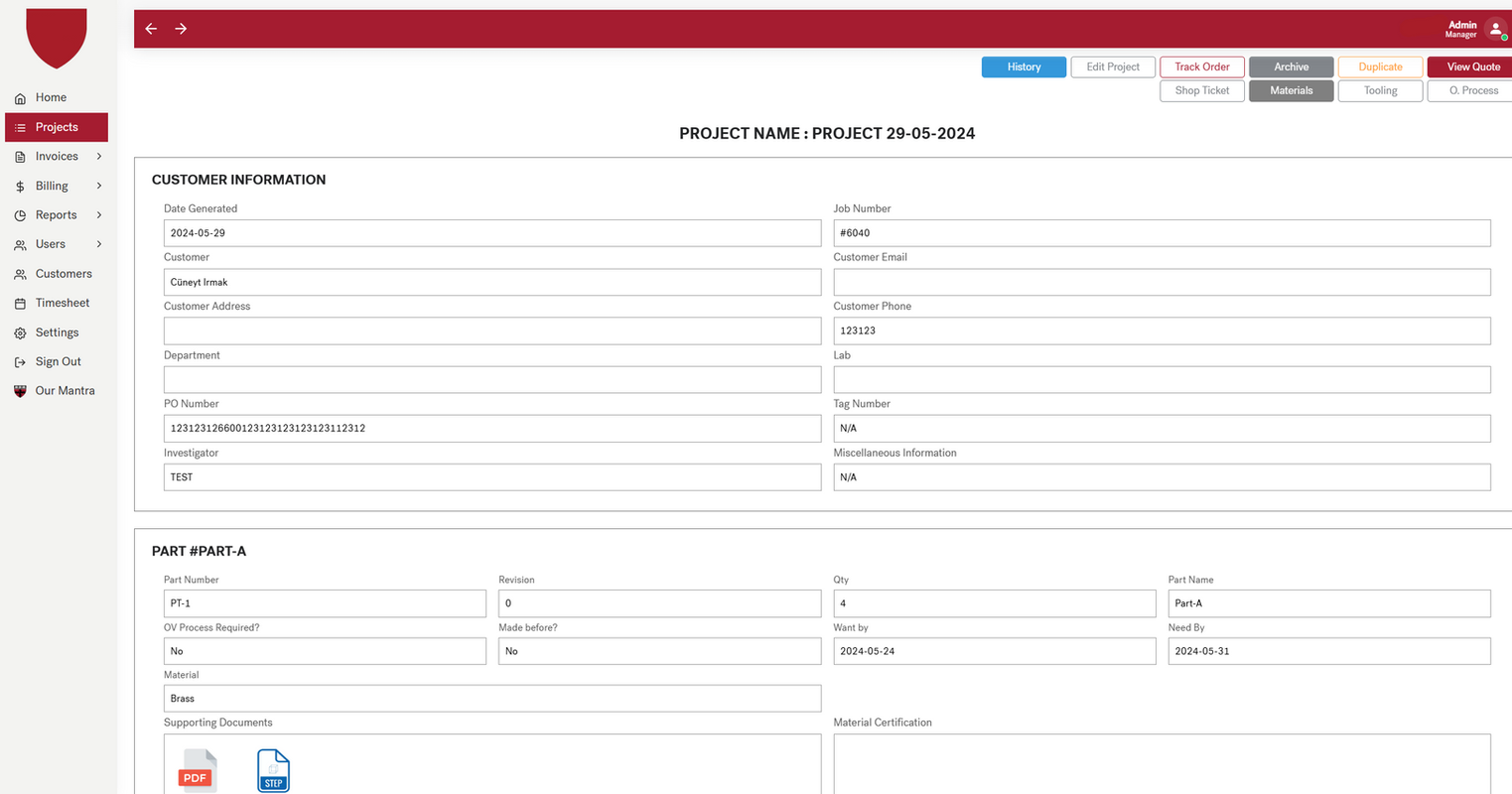
A job is submitted against a charge string and a department, with the part drawings, the material and the date the lab actually needs it attached to the record from the start. The shop gets a queue; the institution gets a recharge trail.
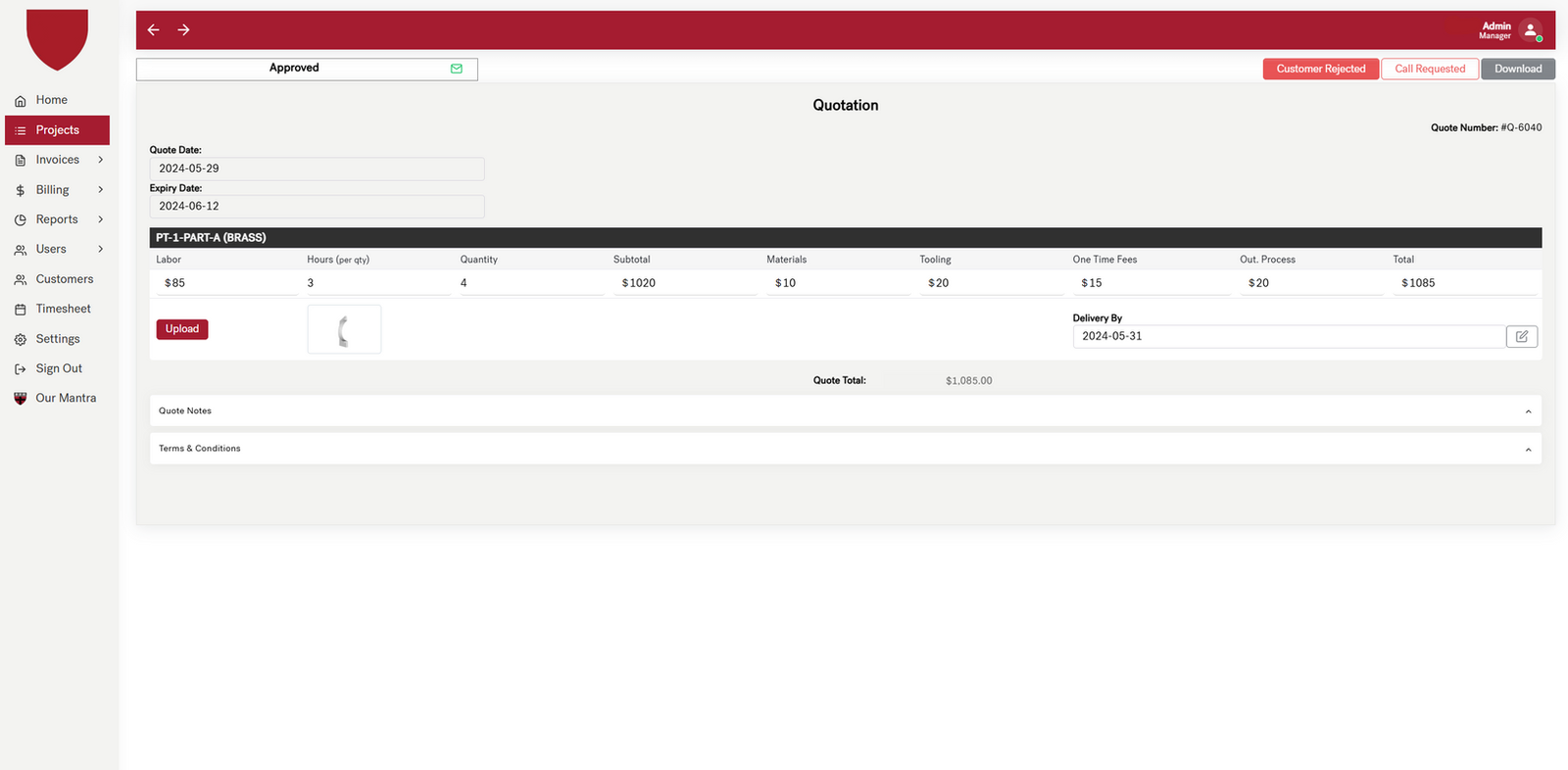
The quotation breaks the part into labour hours, materials, tooling and outside processes, so the price is explainable and the estimate can be reused on the next job like it.
The investigator approves or rejects online against that breakdown, which removes the email chase and timestamps the decision.
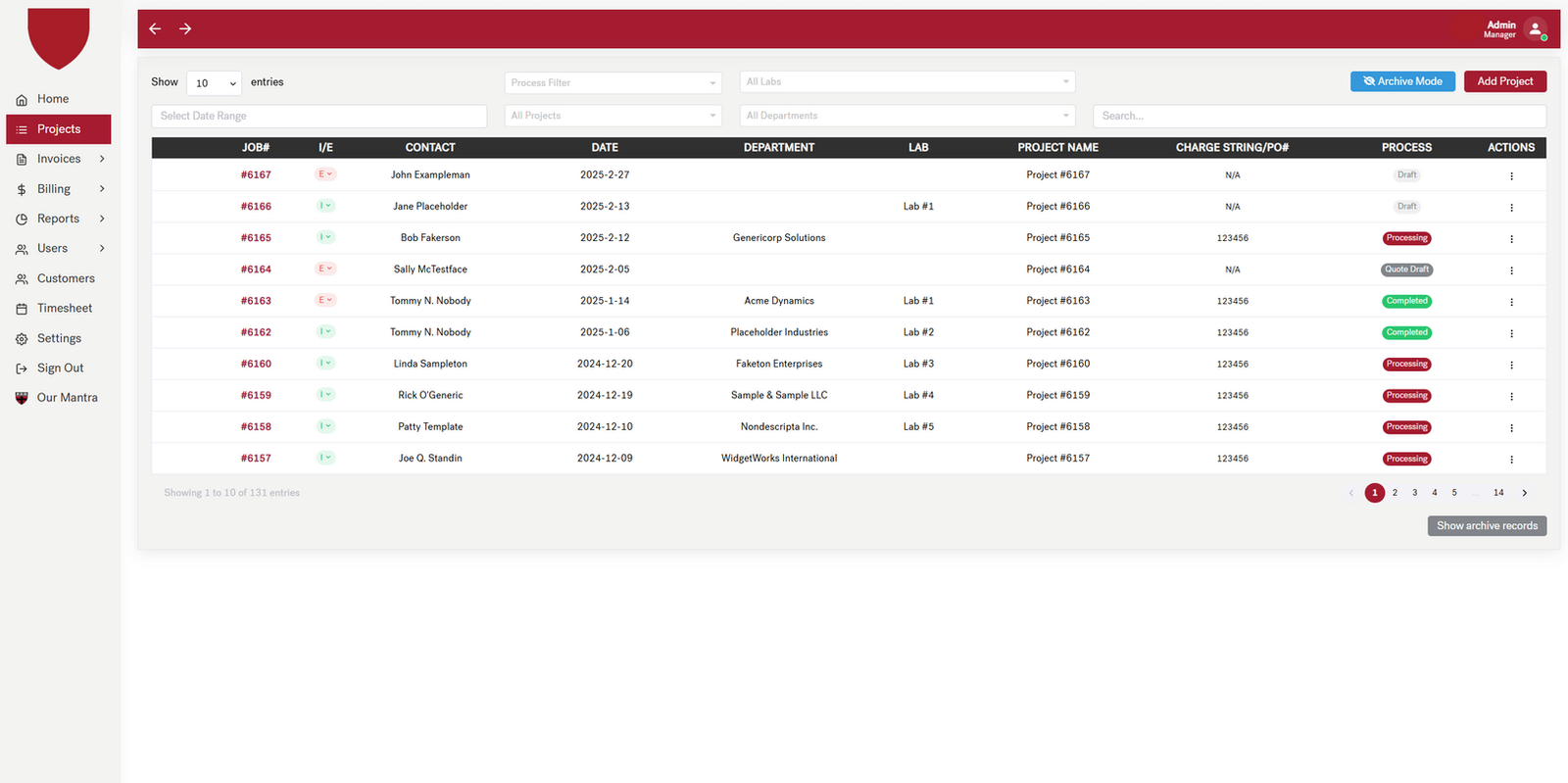
Each job is tracked from draft through processing to completion, and the job list shows every lab’s work with its charge string, department and process status, so the shop’s commitments are visible without asking anyone.
Screens
What it looks like in use.
Features
What is in it
- Job submission against a charge string and department
- Part drawings, material and required-by date on the job record
- Job list across all labs, with process status
- Quotations split into labour hours, materials, tooling and outside processes
- Online approve or reject by the investigator
- Draft → processing → complete tracking on every job
- Customer details held against the job for recharge
Under it
How it is built
A small, plain system on purpose. The users are researchers who will use it a few times a year and machinists who will use it all day, and neither group should have to be trained.
Questions
The things people ask first.
Is this only for universities?
No. Any in-house shop that serves internal customers and has to recharge them works the same way — national labs, hospital workshops, R&D facilities and manufacturers with a tool room.
Does it handle recharging between departments?
It captures the charge string and department on every job, which is what the recharge is built from. The posting itself stays in the institution’s finance system.
Can investigators see progress without emailing the shop?
Yes. That is most of the point: the job’s status is on the record they submitted.
What about outside processes like heat treatment?
They are a line in the quotation alongside labour, materials and tooling, so a part that leaves the shop is still costed on the job.
If your shop runs on email and goodwill and you would like a queue instead, that is a contained piece of work. I am at cuneyt.irmak@outlook.com.
More work
Other systems I have built.
- TradeSorterBarcode stock control and purchase orders for hardware stores and builders’ merchants.
- Audit Tracking PortalSafety and quality audits, corrective actions and target tracking for field teams.
- Inventory, Costing & Margin PortalMaterials, estimates and real margin per build, across multiple factories.
- Event & Team Management PortalWeek-by-week crew planning with hotels, vehicles and invoice status per event.
- Schedule Planner PortalWeekly rotas across sites, typed by session, with activity counts for funders.